 Warhammer 40,000 on Sale including Space Marines & Imperial Knights
 Tiger Shed of the year Winner 2026
 Venti Motorcycle clothing - Shop Now Save Up To 60% While Stocks Last
 Get 500 free Avios with the Avios app
 Access Towers, Scaffolding & Platforms 20% off HIRE
 £5 Miracle-Gro Peat Free All Purpose Compost - 50L - You Save £5.50
 Free entry to all 100+ CAMRA festivals for members- Save £5 on single memberships
 20% Off for National Rum Month Collection
 6' x 3' Forest 25yr Guarantee Shiplap Pressure Treated Garden Bar (1.89m x 1.19m) now 549.99
 $200 off Premium saunas and cold plunges
 Bank Holiday Event! Enjoy An EXTRA 10% OFF With Code BANK10. ENDS 6d
 10% Off when spend £450+ on Office Category
 Summer Sale Is Live: £50 Off £500+
 Hot Wheels F1 25 Premium 1:64 Top 3 Driver Collection: Norris Verstappen Piastri
 10% OFF EVERYTHING - Rarewaves SALE is now on! inlcuding Curzon Artificial Eye
 Buy Mackenzie Crook\'s Shed Opus Small Prophets on Blu-ray or DVD
 EcoFlow: Autumn sale up to 45% off on portable power products with daily rewards
 Live rent Free - cash prize equal to one month's rent
 Heat : £200 off all AC units this Summer
 Up to 40% off Garden Furniture
 Support Shed of the Year - Buy Me a Pint
 Watch Shed of the year TV show NOW on Amazon Prime
 Win a £500 Formula E Store gift card plus a signed Top Trumps card by 2025/26 season winner Pascal Wehrlein
 Daily 1p Deals and Exclusive Brand Meals for 1p - use code EXCLUSIVE1
 5 for £10 on Graphic Novels
Powering the UK Garden Shed
A complete guide to Solar PV and Heat Pumps for your garden office or studio.
The "Garden Shed" has evolved. In post-2020 Britain, it is no longer just a damp store for rusty lawnmowers and spiders. It is a home office, a yoga studio, a cinema room, or a "man cave."
With this evolution comes the need for power and warmth. Running armored cables down the garden is the standard solution, but with energy prices remaining volatile, many homeowners are looking to make their garden rooms self-sufficient. This guide explores the feasibility of installing Solar Photovoltaics and Heat Pumps specifically for UK garden buildings, followed by a comparison of three major UK installers: OVO, Heatable, and Glow Green
1. Solar in the UK Garden Shed
Overview: Can You Power a Shed with the Sun?
Installing solar panels on a garden building is entirely feasible, but it differs significantly from a main roof installation. The primary appeal is autonomy: generating electricity right where you use it, potentially avoiding the cost of upgrading your home's main fuse board or laying heavy-duty trenching cables.
Structural Integrity & Orientation
The first hurdle is weight. A standard 400W solar panel weighs approximately 20kg to 22kg. A small array of four panels (1.6kW system) adds nearly 100kg of static load, plus wind load forces. Most "off-the-shelf" shiplap sheds from DIY stores are not designed to carry this weight. However, modern SIPs (Structural Insulated Panels) garden offices or custom-built timber frame studios are usually robust enough. You must verify the roof's load-bearing capacity before installation.
Orientation is also critical. Garden rooms are often nestled in corners, shaded by fences, the main house, or trees. Unlike a main roof where shadows are minimal, a shed roof is low. If your shed is shaded for half the day, standard "string" inverter systems will struggle. In this scenario, Microinverters (which optimize each panel individually) are essential to ensure one shaded panel doesn't drag down the output of the whole array.
Permitted Development Rights
In the UK, solar panels on outbuildings generally fall under Permitted Development, meaning you do not need planning permission, provided:
- The panels do not protrude more than 200mm from the roof slope.
- The highest part of the panel is not higher than the highest part of the roof.
- The installation is not within the grounds of a listed building or a conservation area (rules are stricter here).
However, if you are installing a "stand-alone" array (ground mounted) next to the shed, it must not exceed 4 meters in height (or 2m if within 5m of the boundary).
The Battery Question
Can you go "Off-Grid"? Technically, yes. But in a UK winter, a shed solar array will generate very little power.
To run a heater, laptop, and lights in December, you would need a massive battery bank that would likely cost more than the shed itself.
Recommendation: Remain grid-tied. Use solar to offset your daytime office consumption, and pull from the grid when the sun sets or winter hits.
Pros of Solar on Garden Rooms
- Energy Independence: Perfect for offsetting the high daytime electricity usage of a home office (PCs, monitors, lighting).
- Space Utilization: Utilizes "dead" roof space, keeping the main house roof clear or adding to total capacity.
- Cost of Cable: If you go fully off-grid (with batteries), you avoid the disruption and cost of trenching armored cable down the garden (though grid-tie is safer).
- Value Add: Increases the desirability of the garden office as a "green" workspace.
Cons of Solar on Garden Rooms
- Shading Issues: Low elevation means fences and trees significantly impact generation compared to house roofs.
- Structural Weight: Requires a reinforced roof; standard sheds will collapse under the weight of glass and aluminium.
- Winter Deficit: A small 4-6 panel array will not generate enough power to heat the space in winter, requiring grid backup.
- Cost per Watt: Small installations (e.g., 2kW) often have a higher "cost per panel" than larger house systems due to fixed installation overheads (scaffolding, electrician call-out).


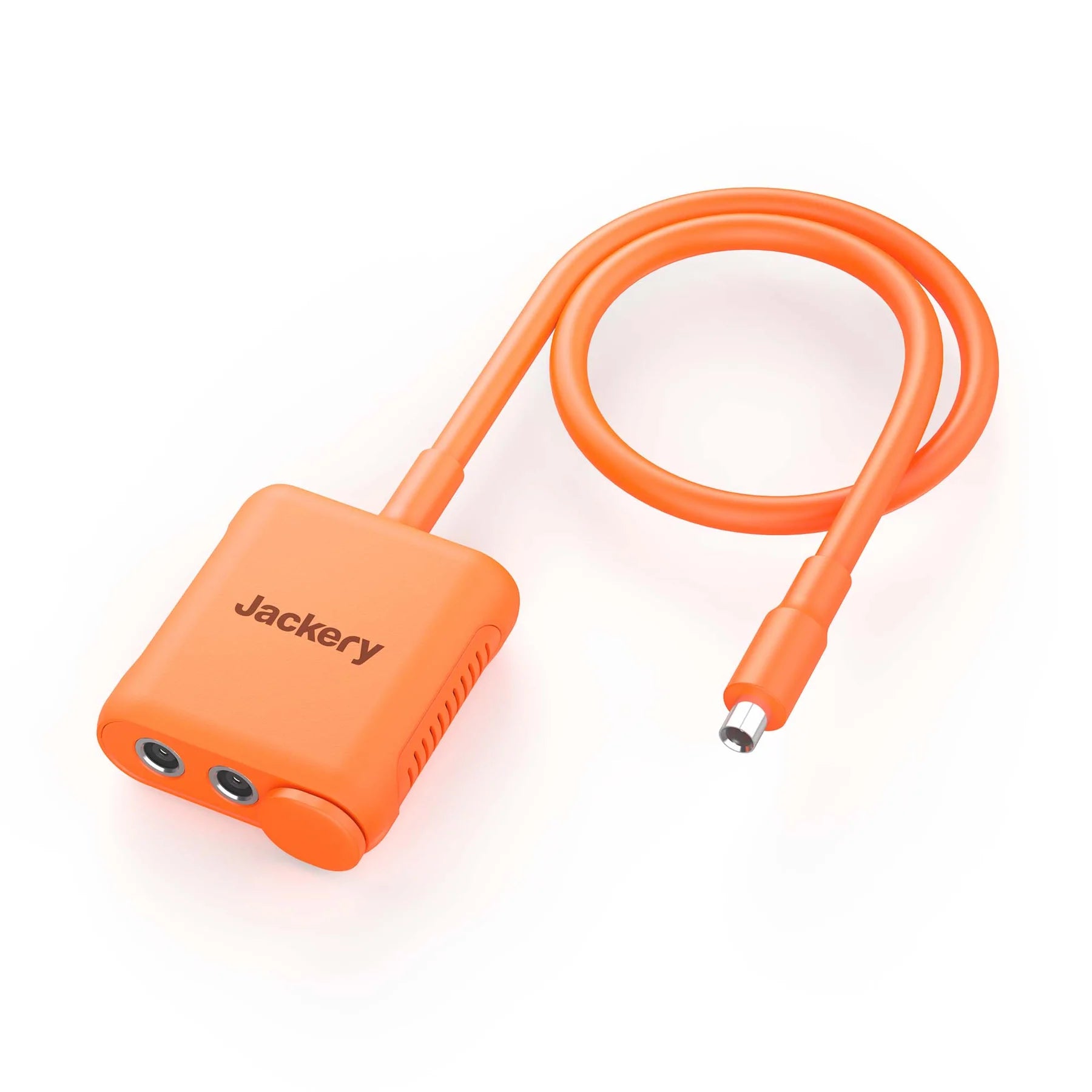


2. Heat Pumps in the UK Garden Shed
Overview: Air-to-Air is King
When people talk about Heat Pumps for the main house, they usually mean Air-to-Water systems (which heat radiators and hot water tanks). However, for a garden shed or office, the correct technology is almost exclusively Air-to-Air (often called a split-system air conditioner).
Air-to-Air heat pumps are incredibly efficient. For every 1kWh of electricity you put in, you get 3 to 4kWh of heat out (COP of 3-4). This makes them 300-400% efficient, compared to a standard electric radiator which is only 100% efficient.
Installation & Regulations
The system comprises a white wall-mounted unit inside and a fan unit outside. The two are connected by copper pipes.
Planning Permission: In England, the installation of an air source heat pump on a domestic premise is usually Permitted Development, provided it complies with MCS 020 standards regarding noise. The external unit must be:
- At least one meter from the property boundary (this is the tricky part for small gardens).
- Installed on a flat surface or wall.
- Used for heating purposes.
If your garden room is right up against the fence, you may need to apply for planning permission or get a "low noise" unit that satisfies the council's requirements.
Insulation is Key
A heat pump works best maintaining a steady temperature. If your garden room is a single-skinned wooden shed with gaps in the floorboards, a heat pump is a waste of money; the heat will escape faster than the pump can generate it. These systems are designed for insulated garden offices (50mm+ Celotex/Kingspan in walls and roof).
The "Cooling" Bonus
The "secret" weapon of the Air-to-Air heat pump is that it is reversible. In the summer, it acts as highly efficient Air Conditioning.
Garden offices are notoriously hot in July and August (often likened to greenhouses). An electric radiator can only heat, but a heat pump solves both the winter freeze and the summer sweat, making the office usable 365 days a year.
Pros of Heat Pumps in Garden Rooms
- Efficiency: Much cheaper to run than electric panel heaters or oil-filled radiators (3-4x cheaper per unit of heat).
- Climate Control: Provides cooling in summer as well as heating in winter.
- Response Time: Air-to-air systems heat a small, well-insulated space very quickly (typically 10-15 minutes).
- Smart Control: Most modern units have Wi-Fi, allowing you to pre-heat the office from your phone before you leave the house.
Cons of Heat Pumps in Garden Rooms
- Upfront Cost: Installation costs range from £1,500 to £2,500, compared to £50 for a plug-in heater.
- Outdoor Space & Noise: Requires an external fan unit which generates a low hum; potential issue if located near a neighbor's patio.
- Boundary Rules: The "1-meter from boundary" rule for Permitted Development can be difficult to meet in small UK gardens.
- Maintenance: Filters need cleaning regularly, and the system should have an annual F-Gas check.
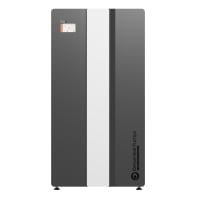
3. Provider Comparison
If you are looking to install solar or heat pumps, you are likely comparing quotes. Below is a comparison of three prominent players in the UK market: OVO Solar, Heatable, and Glow Green Ltd.
 OVO Solar & Heating
Best For: The "All-in-One" Energy Ecosystem.
OVO has moved aggressively into the installation market. Their USP is the integration of the hardware with your energy tariff.
The Offer: If you buy solar/batteries through OVO, they often unlock exclusive "Smart Export Guarantees" (SEG) or "Anytime" add-ons. For example, they have offered 20p/kWh export rates to customers who install with them, which is significantly higher than the market average.
Tech: They typically use mid-to-high tier equipment like JA Solar panels and GivEnergy batteries. Their heat pump offering focuses heavily on the main house (Boiler Upgrade Scheme), so ensure they are willing to quote for a garden "split" system.
Best For: Speed, Technology, and Microinverters.
Heatable disrupted the boiler industry with instant online fixed quotes and has applied the same model to solar.
The Offer: They are arguably the most "tech-forward" of the three. They heavily promote Enphase Microinverters. This is crucial for garden sheds. If a tree shades one corner of your shed, a microinverter system ensures only that one panel drops output, not the whole array.
Tech: They use premium REA Fusion panels (all black, very aesthetic for a garden room) and are exclusive partners with high-end brands. Their turnaround time is rapid, often installing within weeks of inquiry.

Best For: Versatility and Product Range.
Glow Green is a veteran in the installation space, covering boilers, AC, solar, and batteries.
The Offer: Because they install everything, they are a strong contender if you want one company to do both the Heat Pump (AC) and the Solar Panels on your shed simultaneously. They can coordinate the electrical works to ensure your consumer unit can handle both loads.
Tech: They offer a wide range of panels including Perlight and DMEGC. They are also Tesla Certified installers, meaning they can install the Tesla Powerwall, although for a shed, this is likely overkill unless it powers the main house too.
At a Glance Comparison
| Feature | OVO Solar & Heating | Heatable | Glow Green Ltd |
|---|---|---|---|
| Primary Focus | Energy Tariff Integration | Premium Tech & Microinverters | Multi-trade (Heating & Solar) |
| Ideal For Sheds? | Good if you want to link shed generation to house export tariff. | Excellent. Microinverters are best for shaded garden environments. | Very Good. Can install the AC (Heat Pump) and Solar together. |
| Typical Panel Brands | JA Solar, Aiko | REA Fusion | Perlight, DMEGC |
| Trustpilot Rating | 4.5+ (Strong) | 4.8 (Excellent) | 4.7 (Very Good) |
| Warranty | Standard Manufacturer + OVO Workmanship | 25-Year Product & Performance (on specific panels) | Various (depends on package) |
Conclusion
Transforming a garden shed into a sustainable, comfortable workspace is a smart investment in the hybrid-working era.
For heating, an Air-to-Air heat pump is the undisputed champion for efficiency and summer cooling, provided you have the wall space and insulation.
For power, solar is viable if your roof is strong enough and you accept that winter will still require grid power.
Final Verdict on Providers:
- Choose Heatable if your garden has potential shading issues (trees/fences) as their microinverter setup will yield significantly more power.
- Choose Glow Green if you want a "one-stop-shop" to install both your air conditioning and your solar panels in one go.
- Choose OVO if your priority is financial return on export and you are already an OVO energy customer looking to maximize tariff benefits.